Top 15 Workplace Automation Trends Shaping 2026

Did you know that 70% of organizations have adopted structured automation in 2025, up sharply from just 20% in 2021? Yet many small and mid-sized businesses still struggle with disconnected tools, manual processes, and inefficient workflows that eat away at profitability and agility. In today’s fast-changing business environment, workplace automation trends aren’t a buzzword, they are a necessity.

As operations become more complex across sales, HR, finance, manufacturing, and service functions, manual spreadsheets, disjointed tools, and siloed data no longer cut it. For 2026 and beyond, companies that fail to embrace automation risk falling behind, in speed, accuracy, and customer experience.

In this article, you’ll learn about 15 key workplace automation trends shaping 2026. You’ll discover why they matter, how they deliver real ROI, and more importantly, how a unified CRM + ERP platform like CrmLeaf can help you take advantage of them today. Whether you’re a sales leader, HR manager, operations head, finance professional or manufacturing lead, this guide is for you.
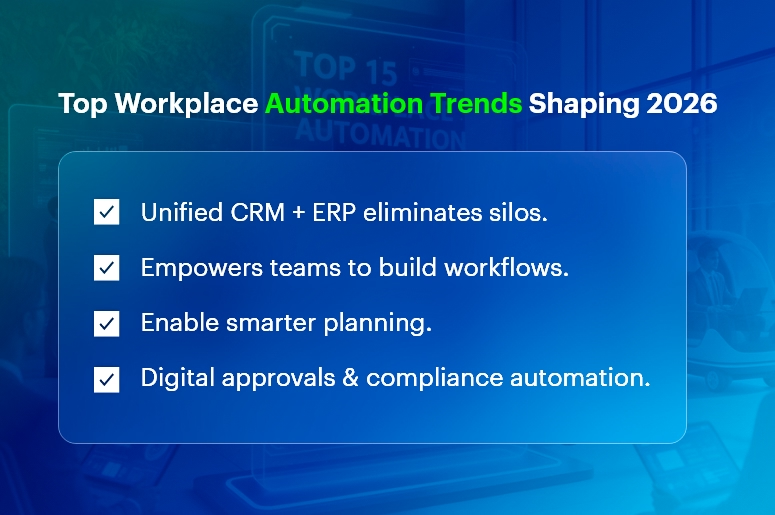
Top Workplace Automation Trends Shaping 2026

Business Need & Importance

Running a business in 2025 and beyond comes with rising expectations: faster decision-making, leaner operations, tighter compliance, better customer satisfaction, and scalable growth. For many small and mid-sized businesses, this means coping with mounting inefficiencies, cost leaks, and sluggish response times.

  • Cost and time overhead due to manual processes: Manual data entry, updating spreadsheets, reconciling information across teams, these tasks consume precious hours every week. As reported, automation can cut operating costs on average by 22% and significantly improve productivity.
  • Risk of errors and miscommunication in disconnected systems: When departments, sales, finance, HR, manufacturing, use separate tools, data duplication, misaligned records, and communication gaps become routine. This often leads to wrong orders, over-stocking, missed payments, compliance lapses, and poor customer experience.
  • Competitive pressure and demand for agility: In sectors like manufacturing, retail, distribution, services, logistics and HR, speed matters. A manufacturer can’t wait days to reconcile inventory and orders; a service firm can’t risk delays in payroll or project billing; a retailer can’t afford stockouts. Automated, real-time systems become critical.

For example:

  • A mid-sized manufacturer relying on spreadsheets for inventory and production scheduling may end up over-producing or underutilizing capacity, leading to higher costs and waste.
  • A retail or distribution company using separate sales, inventory, and accounting tools may promise a delivery it can’t fulfill because stock data isn’t synced — risking customer trust.
  • An HR or services firm juggling HR, payroll, project billing, and finance across tools may miss deadlines, commit compliance violations, or waste management time on low-value admin.

Growing businesses, spreadsheets and disconnected systems are no longer sustainable. They don’t scale. They don’t provide a “single source of truth.” And they don’t offer the real-time insight and automation needed to stay competitive.

That’s why workplace automation trends and adoption of unified CRM systems are becoming mission-critical for SMEs and mid-sized firms alike.

Top 15 Workplace Automation Trends Shaping 2026

Here are the 15 major automation trends that will shape how businesses operate in 2026, with clear implications for small and mid-sized businesses.

1. AI & Machine Learning Integration

Businesses increasingly embed AI and machine learning into core workflows, from lead scoring and customer segmentation to demand forecasting, predictive maintenance, and invoice processing. This doesn’t just automate routine tasks, it helps teams make smarter, data-driven decisions quickly.

2. Hyperautomation & Workflow Orchestration

Hyperautomation, combining automation tools, AI, APIs, and orchestration, enables end-to-end automation of complex business processes. Instead of isolated automation for one task, entire workflows across departments (e.g. sales → inventory → finance) get automated, driving efficiency and eliminating human bottlenecks.

3. No-Code/Low-Code Automation Tools

More tools now allow non-technical users to build automation workflows without coding. This “democratization” empowers sales, HR, operations, and finance teams to create custom automation, no developer required. This reduces dependence on IT and accelerates adoption.

4. Unified CRM + ERP Automation Platforms

Rather than maintaining multiple standalone tools, businesses increasingly turn to unified platforms combining CRM, HR, finance, inventory, manufacturing and more. This centralization ensures real-time visibility, better collaboration, and elimination of silos, a big win for mid-sized firms seeking scale and simplicity.

5. Real-Time Data & Analytics-Driven Workflows

Automation isn’t just about doing tasks, it’s about using data intelligently. Automated dashboards, real-time reporting, and analytics-driven alerts help teams respond quickly to sales trends, stockouts, cashflow issues, or workforce bottlenecks, rather than react after the fact.

6. Intelligent Document Processing & Digital Approvals

From invoices and purchase orders to HR forms and contracts, business thrives on documents. Automation now helps extract data, route approvals, flag exceptions, and archive records. This speeds up processes, reduces manual errors, and enables audit-ready compliance.

7. Automated HR & Payroll Management

HR and payroll workflows are increasingly automated, employee onboarding, attendance tracking, leave approvals, payroll disbursements, performance reviews, compliance reporting. This reduces admin burden and ensures compliance, freeing HR to focus on strategic functions.

8. Inventory, Supply Chain & Manufacturing Automation

For manufacturing, retail and distribution businesses, automation is extending to inventory tracking, stock replenishment, demand planning, production scheduling, supply-chain coordination, and quality control, reducing waste and improving predictability.

9. Project & Task Automation for Services and Projects Teams

Service companies and project-based businesses benefit from automation in project scheduling, task assignment, time tracking, billing, and resource allocation. Automating these helps deliver projects on time, track profitability, and manage resources efficiently.

10. Integrated Finance, Billing & Invoicing Automation

Automated invoicing, payment reminders, expense tracking, financial reporting and reconciliation help finance teams reduce errors, speed up billing cycles, improve cash flow visibility, and free time for strategic financial planning.

11. Demand Forecasting & Predictive Analytics

Automation powered by AI and analytics enables demand forecasting, whether for manufacturing output, inventory replenishment, or staffing needs, helping businesses stay prepared, avoid stockouts, and optimize resource allocation.

12. Self-Service Portals & Chatbots for Customer & Employee Support

Automation of customer support (via chatbots), internal HR support, and self-service portals for employees reduces repetitive queries and frees up staff bandwidth. It also improves customer satisfaction and internal responsiveness.

13. Compliance, Audit Trails & Automated Reporting

Automated systems maintain logs, track changes, archive records, and generate audit-ready reports. This helps companies stay compliant with financial regulations, labour laws, tax rules, especially needed for growing businesses operating across regions or industries.

14. Scalability & Modular Growth via Cloud Automation

As cloud-based SaaS automation platforms mature, businesses can adopt modules incrementally, CRM first, then inventory, then manufacturing, HR, finance, scaling automation as they grow, without overhauling everything at once.

15. Human + Digital Worker Collaboration (Augmented Workforce)

Rather than replacing people, many automation solutions now focus on augmentation, enabling employees to focus on higher-value work while robots, bots, or AI handle repetitive tasks. This increases job satisfaction, reduces burnout and enables teams to leverage creativity, judgment, and strategy.

Best Practices, Frameworks & Actionable Tips

Implementing automation effectively, especially across multiple departments, requires a thoughtful, strategic approach. Here’s a roadmap for small and mid-sized businesses ready to adopt these workplace automation trends with a unified platform like CrmLeaf.

Do’s

  • Start with a clear automation strategy.

Before automating everything, map out your core business processes, sales to cash, procurement to payables, HR onboarding, inventory to delivery, project to billing. Identify repetitive tasks, bottlenecks, and pain points. This ensures automation targets the highest value areas first.

  • Choose a unified CRM + ERP platform.

Rather than cobbling together disparate tools, choose a unified solution that integrates CRM, HRMS, inventory, finance, manufacturing and projects. This creates a single source of truth, eliminates silos, reduces duplication, and ensures data flows seamlessly across departments. For example, CrmLeaf modules (CRM, HRMS, Payroll, Inventory, Manufacturing, Projects, Finance) work together, so a sales order automatically reflects inventory, production, and finance.

  • Leverage no-code/low-code automation where possible.

Empower non-technical staff, sales, HR, operations, to build simple automations and workflows themselves without needing IT involvement. This speeds rollout and enhances adoption.

  • Automate end-to-end workflows (not just tasks).

Focus on full process automation: from lead capture to order fulfillment and invoicing, or from recruitment to onboarding and payroll. This holistic approach delivers maximum efficiency and eliminates manual hand-offs.

  • Enable real-time data & dashboards.

Set up real-time dashboards and alerts, for inventory stock, cash flow, project progress, overdue invoices, staffing shortfalls, to help managers make quick decisions instead of waiting for periodic reports.

  • Build strong change-management and training culture.

As automation grows, ensure employees understand new workflows, are trained properly, and know how to collaborate with automated systems. Include human oversight where needed, especially in complex tasks.

  • Measure ROI and track performance.

Define clear metrics, time saved, cost reduced, error rates, cash-flow improvement, cycle time decrease, and track them before and after automation. This helps demonstrate real value and refine automation over time.

Don’ts & Common Mistakes to Avoid

  • Don’t automate before documenting processes.

Automating messy or undefined processes simply magnifies inefficiencies. Always document workflows, steps, decision points, and exceptions before building automation.

  • Don’t implement multiple tools in silos.

Using a CRM for sales, a separate ERP for inventory, another for HR, leads to data fragmentation, duplication and misalignment. That defeats the purpose of automation.

  • Avoid over-automation without human oversight.

Some tasks require judgment, empathy, or human discretion (e.g. HR evaluations, complex customer queries). Automate what makes sense, but retain human control where needed.

  • Don’t ignore data quality and governance.

Automation is only as good as the data it works on. Poor data quality leads to wrong decisions, inaccurate forecasts, and compliance risks.

  • Don’t implement all automation at once.

A full-scale automation rollout can overwhelm teams and disrupt operations. Instead, take a modular, phased approach, automate one domain at a time (sales → inventory → finance → HR …), gather feedback, then expand.

Implementation Framework & Quick Wins

Phase What to Do Quick Wins / Results
Phase 1 – Discovery Map all business processes, identify repetitive tasks, bottlenecks, and high-impact areas Understand where automation delivers the highest ROI
Phase 2 – Choose Platform & Modules Select a unified CRM + ERP platform (like CrmLeaf), decide modules to start with (e.g. CRM + Inventory + Finance) Centralized data, elimination of silos, reduced manual data entry costs
Phase 3 – Pilot Automation Automate a small, high-value process (e.g. lead-to-order → invoice); build a no-code workflow or automation Immediate time savings, faster sales cycles, fewer errors
Phase 4 – Expand Gradually Add more modules (HRMS, Payroll, Projects, Manufacturing), integrate workflows end-to-end Better inter-department coordination, real-time visibility, streamlined operations
Phase 5 – Monitor & Optimize Set KPIs (time saved, cost reduction, error rate), track results, iterate workflows Clear ROI, continuous improvement, data-driven operations

Why Unified CRM + ERP is Superior

A unified CRM + ERP platform isn’t just “nice to have” it’s foundational in this automation era. Here’s why:

  • Single source of truth across departments — When sales, inventory, manufacturing, finance, HR, and projects are in one system, data stays consistent. No manual reconciliation, no duplicate entries, no conflicting records.
  • Seamless end-to-end workflows — A quote entered by sales immediately shows up in inventory, triggers stock checks, signals manufacturing (if needed), triggers billing, updates accounts receivable — all automated. That kind of end-to-end orchestration is impossible when systems are disconnected.
  • Real-time insight & decision-making — Leaders get live dashboards: real-time cash flow, inventory levels, project statuses, workforce utilization — enabling them to act proactively rather than reactively.
  • Scalable and modular growth — As your business grows, you can enable new modules (HRMS, Payroll, Manufacturing, Project Management) without migrating data or switching platforms — perfect for SMBs evolving into mid-sized firms.
  • Lower total cost of ownership and reduced IT overhead — Instead of managing multiple vendors, integrations, and maintenance, one unified platform simplifies IT, reduces errors, and delivers better ROI.

In short: unified CRM + ERP is not just a convenience — it’s the backbone of modern, automated, data-driven business operations.
Key Takeaways & Closing

Workplace automation trends for 2026 are not just about doing things faster, they’re about doing them smarter, with fewer errors, better visibility, and real scalability.

By embracing automation, especially through a unified CRM + ERP platform like CrmLeaf, small and mid-sized businesses can eliminate silos, cut costs, improve collaboration, speed up operations, and scale with confidence.

The time to act is now. The future of streamlined, efficient, data-driven business operations is here, and it’s powered by workplace automation trends.

With the right tools and mindset, you’ll be well-positioned to thrive in the decade ahead.

FAQs

Q: What are “workplace automation trends”?

Workplace automation trends refer to emerging patterns and technologies, like AI, hyperautomation, unified CRM + ERP platforms, that automate business processes, reduce manual work, and enable data-driven operations across departments.

Q: Why should small and mid-sized businesses care about these trends?

Because manual processes, disconnected tools, and data silos don’t scale. Automation brings cost savings, efficiency, accuracy, and real-time insight, helping growing businesses stay competitive.

Q: Can automation replace human teams?

Not entirely. Automation works best when it augments human efforts, handling repetitive tasks while people focus on strategic, creative, or judgment-based work. A unified platform ensures humans and digital workflows collaborate effectively.

Q: Is it expensive to implement automation and unified systems like CrmLeaf?

Not necessarily. Many modern unified platforms offer modular, scalable pricing, you can start small (CRM + one module) and gradually expand. Reductions in manual workload, errors, and admin overhead often pay for the investment quickly.

Q: How do I know which workflows to automate first?

Start with high-volume, repetitive, error-prone tasks, for example: lead-to-order processing, invoice generation, inventory updates, payroll, or project billing. Those deliver quick ROI and build confidence for broader automation.

Q: Will automation make compliance easier?

Yes. Automated systems maintain audit trails, track changes, archive records, and generate reports, which helps with financial compliance, tax reporting, payroll regulations, and audit readiness.

Q: Does using a unified CRM + ERP platform limit flexibility?

No, in fact, it increases flexibility. Unified platforms provide modular growth, real-time data access, cross-functional workflows, and the ability to adapt as your business evolves, without migrating data or juggling multiple tools.

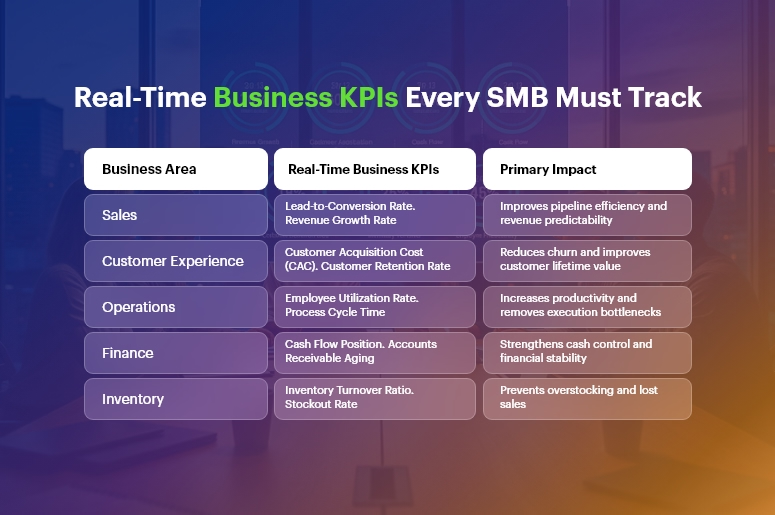
Business KPIs Every SMB Should Track in Real-Time

In 2025, over 70% of small and mid-sized businesses fail to meet growth targets not because of lack of effort—but because of lack of visibility. Leaders often realize problems only after revenue drops, costs spike, or customers churn. By the time monthly reports are reviewed, the damage is already done.

This is the core challenge modern SMBs face: decisions are being made with outdated data. Spreadsheets, disconnected software, and manual reports simply cannot keep pace with today’s fast-moving operations. As markets become more competitive, businesses that rely on hindsight are being outperformed by those that operate in real time.

This is why real-time business KPIs have become non-negotiable. They give leaders instant clarity on what is working, what is failing, and where immediate action is required.

In this blog, you will learn which business KPIs every SMB should track in real time, why they matter across departments, and how a unified CRM + ERP platform like CrmLeaf helps you monitor, analyze, and act — without complexity.

Real-Time-Business-KPIs-Every-SMB-Must-Track

Business Need & Importance

Modern SMBs operate in an environment where speed, accuracy, and coordination directly impact profitability. However, many businesses still manage sales, HR, finance, projects, and inventory in silos. As a result, leaders lack a single source of truth.

Here is why tracking real-time business KPIs is critical today:

  • Rising operational complexity: As teams grow and processes scale, manual tracking becomes error-prone. Without real-time KPIs, inefficiencies remain hidden until they turn into financial losses.
  • Higher customer expectations: Customers expect faster responses, accurate billing, and consistent service. Therefore, delayed insights directly affect customer satisfaction and retention.
  • Cost pressure and margin volatility: Inflation, supply chain disruptions, and labor costs demand tighter financial control. Real-time KPIs enable proactive cost management instead of reactive firefighting.

Industry examples:

  • Manufacturing: Without real-time production, inventory, and rejection-rate KPIs, manufacturers face overstocking, stockouts, and quality issues that erode margins.
  • Retail & Distribution: Delayed visibility into sales velocity and inventory turnover leads to lost revenue and excess carrying costs.
  • Services & Projects: When utilization and project cost KPIs are not tracked in real time, businesses suffer from overruns, delayed billing, and reduced profitability.

This is why spreadsheets and disconnected tools no longer work. SMBs need automated, integrated systems where KPIs update instantly across departments. A unified CRM platform ensures every stakeholder sees the same numbers – at the same time.

Best Practices, Frameworks & Actionable Tips

Core Real-Time Business KPIs Every SMB Must Track

1. Sales & Revenue KPIs

  • Lead-to-Conversion Rate: Tracks how efficiently leads turn into customers. Real-time visibility helps sales managers intervene early and optimize pipelines.
  • Revenue Growth Rate: Shows whether growth strategies are working. Monitoring this daily prevents surprises at month-end.
  • Average Deal Value: Highlights upselling and pricing effectiveness, especially when integrated with CRM opportunity data.

2. Customer Experience KPIs

  • Customer Acquisition Cost (CAC): Real-time CAC helps marketing teams control spend and improve ROI.
  • Customer Retention Rate: Indicates loyalty and service quality. Sudden drops signal operational or support issues.
  • Ticket Resolution Time: Ensures service teams meet SLAs and maintain customer trust.

3. Operations & Productivity KPIs

  • Employee Utilization Rate: Measures productive time vs. available time, crucial for service and project-based businesses.
  • Process Cycle Time: Tracks how long key workflows take, enabling continuous improvement.
  • Task Completion Rate: Provides managers visibility into execution discipline across teams.

4. Financial KPIs

  • Cash Flow Position: Real-time cash visibility protects SMBs from liquidity shocks.
  • Operating Margin: Reveals profitability after core expenses, helping leaders adjust quickly.
  • Accounts Receivable Aging: Prevents delayed collections from impacting working capital.

5. Inventory & Supply Chain KPIs

  • Inventory Turnover Ratio: Shows how efficiently stock moves, reducing carrying costs.
  • Stockout Rate: Helps prevent lost sales due to poor planning.
  • Order Fulfillment Time: Directly impacts customer satisfaction and repeat business.

Best Practices for Implementing Real-Time KPI Tracking

  • Define KPIs aligned with business goals: Avoid vanity metrics. Every KPI should influence decisions and outcomes.
  • Limit KPIs per role: Executives, managers, and teams need different dashboards for clarity and focus.
  • Automate data collection: Manual inputs delay insights and increase errors.
  • Review KPIs daily, not monthly: Real-time business KPIs are only valuable when acted upon quickly.

Do’s and Don’ts

Do:

  • Centralize data across CRM, HRMS, finance, and operations.
  • Set thresholds and alerts for critical KPIs.
  • Train teams to interpret KPI trends, not just numbers.

Don’t:

  • Track too many KPIs without accountability.
  • Rely on static reports.
  • Ignore cross-departmental dependencies.

Why a Unified CRM + ERP Is the Superior Solution

A unified platform like CrmLeaf eliminates data silos by connecting:

  • CRM: Real-time sales pipelines, conversions, and customer insights.
  • HRMS & Payroll: Live workforce costs, attendance, and productivity.
  • Manufacturing & Inventory: Production efficiency, stock levels, and quality metrics.
  • Projects: Utilization, timelines, and cost tracking.
  • Finance: Instant visibility into cash flow, margins, and receivables.

As a result, real-time business KPIs become actionable, accurate, and trusted across the organization.

Customer Success

A mid-sized manufacturing and distribution business, implemented real-time KPI dashboards using CrmLeaf to solve fragmented reporting and delayed decision-making.

Before CrmLeaf, their sales, production, inventory, and finance teams worked in separate systems. Monthly reports took days to compile, and inventory mismatches often caused missed deliveries.

Within 90 days of implementing CrmLeaf’s unified CRM platform, achieved measurable results:

  • 25% reduction in inventory carrying costs through real-time stock visibility
  • 18% improvement in on-time order fulfillment by tracking production KPIs live
  • 30% faster management decisions with real-time business KPI dashboards
  • Significant reduction in manual reporting effort, saving over 40 hours per month

By aligning sales forecasts, production planning, and financial KPIs in one system, the company transformed from reactive management to proactive control.

Key Takeaways & Closing

In today’s fast-paced environment, visibility equals control. SMBs that rely on delayed reports are constantly reacting, while those tracking real-time business KPIs stay ahead of problems and opportunities.

By monitoring sales, customer, operations, financial, and inventory KPIs in real time, businesses gain the clarity needed to scale confidently. More importantly, when these KPIs are connected across departments, leaders can make decisions that are faster, smarter, and more profitable.

As 2025 demands agility and accountability, unified platforms like CrmLeaf are no longer optional—they are foundational. The future belongs to businesses that can see, decide, and act in real time.

FAQs

1. What are real-time business KPIs?

Real-time business KPIs are performance metrics that update instantly as data changes, allowing SMBs to make immediate and informed decisions.

2. Why are real-time business KPIs important for SMBs?

They help SMBs detect issues early, improve efficiency, control costs, and respond faster to market changes.

3. How many KPIs should an SMB track?

Most SMBs should track 10–20 real-time business KPIs, tailored by role and department, to avoid information overload.

4. Can spreadsheets handle real-time KPI tracking?

Spreadsheets lack automation and integration, making them unsuitable for accurate real-time business KPI tracking at scale.

5. How does CrmLeaf support real-time KPI monitoring?

CrmLeaf unifies CRM, HR, finance, inventory, and projects into one platform, delivering live KPI dashboards without manual effort.

6. Are real-time KPIs expensive to implement?

With unified platforms like CrmLeaf, SMBs can implement real-time business KPIs without heavy IT costs or complexity.

7. Which KPI should SMBs prioritize first?

Cash flow, revenue pipeline, and customer retention KPIs are typically the most critical starting points for SMBs.

Top 10 Sales Automation Workflows Every Growing Business Needs

Did you know that businesses lose up to 30% of revenue every year due to inefficient processes and manual tasks? In fast-growing companies, sales teams spend more time entering data, tracking follow-ups, and updating spreadsheets than actually selling. That’s why Sales Automation is no longer optional — it’s a competitive necessity in 2025.

Customers expect immediate responses, accurate information, and frictionless experiences. Meanwhile, organizations require deep visibility into leads, performance, and conversion metrics.

That’s where CrmLeaf’s unified CRM + ERP ecosystem becomes a game-changer — it automates sales workflows across leads, quotes, approvals, finance, and inventory, while keeping customer experiences fast and consistent.

In this guide, you’ll learn the top 10 Sales Automation workflows that help unlock productivity, reduce costs, and accelerate growth — all future-ready with CrmLeaf.

Top 10 Sales Automation Workflows for Growth

Why Sales Automation Is Essential for Growing Businesses

As markets scale and competition intensifies, businesses face:

  • Slower revenue cycles due to manual handoffs between CRM, inventory, and finance
  • Data duplication and errors caused by siloed tools
  • Sales delays from approvals, verification, and compliance checks
  • High operational costs due to human-heavy processes
  • Poor customer experience, leading to lost opportunities

Moreover:

  • In manufacturing, quotation delays can lose deals worth lakhs.
  • In logistics, slow lead routing can push clients to competitors.
  • In retail and distribution, stock inaccuracies result in failed commitments.

Disconnected systems — like spreadsheets and isolated CRM tools — cannot support scalability.

Therefore, businesses need a single source of truth that unifies:

Function What Sales Needs from It CrmLeaf Connection
CRM Leads, opportunities, pipeline Fully native
Inventory Stock visibility before quoting Integrated ERP
Finance Pricing, tax, invoicing sync Automated & secure
Projects Customer delivery timelines Seamless transfer
HR Sales performance & commissions Built-in payroll link

With Sales Automation inside CrmLeaf:

  • Every lead gets tracked.
  • Every quote stays accurate.
  • Every approval happens faster.
  • Every customer gets a smooth buying experience.

The Top 10 Sales Automation Workflows Every Business Needs

Automated Lead Capture & Assignment

Automatically pull leads from web forms, emails, social channels, and WhatsApp into CrmLeaf. Sales Automation assigns them to the right sales rep based on geography, product line, or workload, ensuring no missed opportunities.

Lead Qualification & Scoring

CrmLeaf evaluates leads based on behavior, interest, company data, and interactions. High-potential leads receive priority follow-ups, while irrelevant ones don’t drain resources — improving sales efficiency instantly.

Follow-Up Scheduling & Reminders

Never forget a follow-up again. CrmLeaf alerts reps with real-time task notifications, automated emails, and smart reminders. This ensures consistent engagement until leads convert.

Sales Pipeline Tracking & Forecasting

Visual pipeline boards update automatically as deals progress. Sales leaders get accurate forecasting dashboards to decide where to invest effort, improving win rates and planning.

Quote Generation with Real-Time Pricing

CrmLeaf links CRM + Inventory + Finance to ensure accurate pricing, taxes, and stock validation before sending quotes. This removes delays and prevents overselling or pricing errors.

Approval Workflows for Deals & Discounts

Requests like special pricing or payment terms automatically route to managers. Workflow automation shortens approval cycles from days to minutes and increases governance.

Proposal Follow-Ups & e-Signatures

CrmLeaf sends automated proposal reminders and enables digital signatures for instant closure. This accelerates decision-making and improves the customer experience drastically.

Order-to-Cash Automation

Once a deal is won → ERP triggers order creation, delivery planning, and invoice automation. Sales and finance align perfectly with zero re-entry effort.

Customer Onboarding Tasks

Sales Automation automatically hands off customer details to service or project teams. Customers experience fast, structured onboarding without repeated information sharing.

Customer Retention & Upsell Automation

CrmLeaf monitors buying behavior, renewal timelines, and support history. Trigger upsell campaigns, loyalty offers, and renewal reminders to maximize lifetime value.

Best Practices for Implementing Sales Automation Successfully

Here’s how to ensure automation drives real outcomes — not complexity.

Step-by-Step Adoption Framework

  • Map current workflows, including delays and handoffs
  • Connect CRM + ERP data for transparency
  • Automate high-value tasks first (follow-ups, approvals, quoting)
  • Upskill your teams to use automation confidently
  • Measure results using dashboards and iterate regularly

Do’s and Don’ts

Do Why It Matters
Automate repetitive, manual work Speeds up daily activities
Maintain clean, structured data Improves decision-making
Align sales with operations Inventory & finance stay accurate
Provide mobile access Sales stays fast in the field


Don’t Why It Hurts
Over-automate customer-first interactions It may feel robotic
Use disconnected tools Risks duplication and errors
Set and forget workflows Business conditions evolve

Quick Wins to Start With CrmLeaf

  • Automate lead imports from every channel
  • Use pipeline stage automation for reporting
  • Setup automated email sequences for follow-up
  • Enable smart approvals for discounts & quotations

Common Mistakes to Avoid

  • Assuming automation replaces people — it augments them
  • Lack of cross-department alignment
  • Using outdated data in workflows
  • Ignoring change management and training

Customer Success Story: Operational Transformation with CrmLeaf

For example, a leading manufacturing supplier in India implemented Sales Automation using CrmLeaf to eliminate delays in quoting and order approvals. They previously relied on spreadsheets and manual coordination between inventory and finance.

Within just 60 days, they achieved:

  • 40% faster quote approvals
  • 23% increase in conversions
  • 85+ hours saved per month in admin work
  • 100% visibility of product availability before commitment

Here’s how it transformed operations:

  • Sales reps now get real-time pricing and stock checks
  • Finance auto-generates invoices aligned to approved quotes
  • Inventory teams plan dispatch without coordination delays

This is how CrmLeaf powers revenue speed + process accuracy together.

Key Takeaways

To win in modern markets, sales teams must operate fast, accurate, and connected.

Sales Automation eliminates delays, boosts conversions, and improves customer experiences.

CrmLeaf gives you everything — CRM, ERP, Finance, Inventory, and Projects — in one system so your workforce stays productive and your business stays competitive.

In short: Sales Automation is your growth engine.

Frequently Asked Questions

  • What is Sales Automation and why do businesses need it?

Sales Automation uses technology to replace manual sales tasks like follow-ups, approvals, and quoting. It helps businesses work faster, reduce errors, and win more deals.

  • How does Sales Automation improve accuracy?

It keeps all data synchronized across CRM, inventory, and finance. With CrmLeaf, pricing, taxation, and stock updates are automated — ensuring Sales Automation supports correct commitments.

  • Will automation replace sales teams?

Not at all. It removes repetitive tasks so teams focus on high-value selling and customer relationships.

  • Can Sales Automation help customer experience?

Yes! Faster responses, accurate proposals, and seamless onboarding make customers feel valued — which increases loyalty and referrals.

  • Why is CRM + ERP integration important for Sales Automation?

Because sales impacts inventory, finance, delivery, and payroll. A unified platform like CrmLeaf prevents duplication and delays.

  • How quickly can companies see results?

Most CrmLeaf customers see productivity improvements and quicker deal cycles in 30–90 days, depending on scope.

  • Is Sales Automation expensive?

With CrmLeaf’s unified system, you remove multiple tools — making automation cost-efficient with a higher ROI.

CRM vs. Spreadsheet Chaos: Why Teams Must Switch Today?

What happens when your sales team updates one spreadsheet, finance updates another, and HR holds a completely different version?

The result is spreadsheet chaos — duplicated entries, wrong numbers, delayed responses, and confused customers.

Even today, many businesses rely heavily on Excel or Google Sheets to manage leads, quotes, payroll, and operations.

However, in a world where accuracy and agility drive growth, spreadsheets create bottlenecks. That’s why CRM vs. Spreadsheet Chaos is the biggest operational debate for modern organizations.

This blog reveals why spreadsheets fail growing businesses and how CrmLeaf empowers teams to streamline operations, boost productivity, and achieve real-time visibility with a unified CRM + ERP platform.

Why Businesses Choose CrmLeaf

Why Businesses Must Outgrow Spreadsheets

Spreadsheets were never built for scaling teams or complex business operations. They introduce challenges such as:

  • High Risk of Manual Errors

Data entry mistakes result in incorrect quotes, delayed deliveries, and compliance issues.

  • Siloed and Fragmented Information

Every department maintains separate files — sales, finance, inventory, payroll — none synchronized.

  • Zero Automation = Lost Productivity

Routine tasks such as approvals, reminders, invoicing, and follow-ups must be done manually.

  • No Accountability or Audit Trails

Anyone can overwrite formulas or delete data without traceability — a nightmare for audits.

  • Lack of Forecasting and Real-Time Insights

Reports take hours to compile and are usually outdated before decision-makers even see them.

As customer demands accelerate, spreadsheet-driven operations simply cannot keep up.

CRM vs. Spreadsheet Chaos: What Changes with CrmLeaf?

CrmLeaf replaces spreadsheet-driven inefficiencies with connected business intelligence.

Capability Spreadsheets CrmLeaf Unified Platform
Lead Tracking Manual Automated with pipeline visibility
Inventory & Production Offline logs Real-time shop floor updates
Finance & Payroll Complex formulas Smart workflows + compliance
Approvals Email reminders Built-in role-based approvals
Reporting Static sheets Interactive dashboards & forecasts
Data Security Basic password Encryption + access controls + logs

With CrmLeaf, every department works with the same accurate data, updated in real time.

Best Practices to Transition from Spreadsheet Chaos

Switching doesn’t have to be intimidating — CrmLeaf makes it simple.

  • Assess Current Spreadsheet Workflows

    • Identify bottlenecks and duplication
    • Map critical processes like Order-to-Cash and Hire-to-Retire
  • Set Clear KPIs

Examples:

    • “Reduce manual data entry by 60%”
    • “Improve inventory reporting accuracy to 99%”
  • Implement in Phases

    • Pilot with one team (ex: Sales)
    • Expand to Inventory, Projects, HRMS, and Finance
  • Automate Quick Wins

    • Auto reminders for overdue payments
    • Auto stock reorder triggers
    • HR auto leave approvals
  • Maintain Data Governance

    • Role-based access and field validation
    • Eliminate duplicates during migration
    • Regular data quality checks

Result: Faster adoption + immediate ROI

Case Study: How CrmLeaf Eliminated Spreadsheet Chaos

A mid-size manufacturing firm struggled with scattered production schedules and inaccurate inventory spreadsheets.

After implementing CrmLeaf:

  • 35% reduction in inventory carrying cost
  • 22% faster production cycle time
  • 8% procurement savings through timely approvals
  • Zero stockout occurrences reported in 90 days

Their teams now access a single source of truth across CRM, Inventory, Projects, HRMS, and Finance.

Key Takeaways: The Future Is Unified, Not Fragmented

  • Spreadsheets slow down scaling businesses
  • Automation boosts productivity, accuracy, and team collaboration
  • CrmLeaf eliminates spreadsheet chaos with real-time, end-to-end workflows
  • A unified CRM + ERP platform is now a strategic competitive advantage

In 2025 and beyond — speed wins.

Your competitors are already automating… are you still updating spreadsheets manually?

FAQs

1. Why should we move from spreadsheets to CRM solution?

CrmLeaf centralizes customer, financial, and operational data — eliminating manual errors and siloed workflows.

2. Can small businesses benefit from CRM?

Absolutely. Automation helps SMBs grow faster with lower operational costs.

3. Does CRM support industry-specific workflows?

Yes — manufacturing, distribution, and services can customize modules, approvals, and reports.

4. How secure is data in CRM?

Role-based access, encryption, audit logs, and compliance-driven controls provide advanced protection.

5. How quickly can teams transition?

Teams experience productivity improvements in 30–60 days with phased rollout support.

How CrmLeaf Centralizes Your Customer Data for Faster Decisions?

Every second counts in business today. Customers expect quick responses, competitive pricing, accurate orders, and consistent communication. Yet 83% of executives say that slow access to customer data prevents them from making timely decisions.

When your sales team updates a lead, your warehouse checks stock, or finance reviews payment status — delays create friction and lost opportunities.

CrmLeaf eliminates this fragmentation. Instead of juggling multiple tools and spreadsheets, your entire business runs on a single platform — CRM, HR, Payroll, Manufacturing, Projects, Inventory, Finance — all working together in real time.

This guide reveals:

  • Why fragmented systems slow decision-making
  • How CrmLeaf centralizes customer data for accuracy and speed
  • Best practices from real business implementations
  • Practical steps to launch fast and scale confidently

By the end, you’ll clearly see how centralized data supports faster conversions, reduced inefficiencies, and stronger customer relationships.

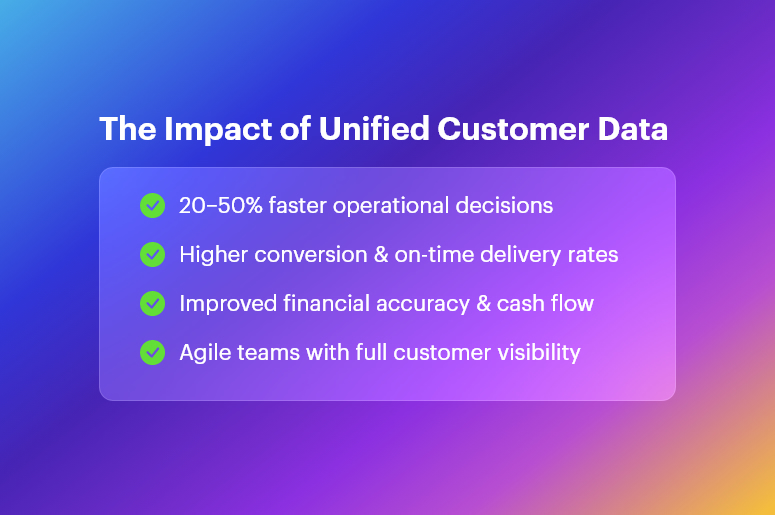
The Impact of Unified Customer Data

How CrmLeaf Centralizes Your Customer Data for Faster Decisions in 2025

A unified system is no longer just an upgrade — it’s a competitive advantage. CrmLeaf is engineered to help growing companies eliminate data silos and support smarter business decisions.

Comprehensive Data Integration

Every customer touchpoint flows automatically into CrmLeaf:

  • Sales quotes and purchase history
  • Accounts receivable and payment records
  • Manufacturing orders and delivery timelines
  • Support tickets and feedback loops

No CSV uploads. Forget duplicated entries. No waiting for “the latest version.”

This instantly improves:

  • Forecast accuracy
  • Sales prioritization
  • Customer satisfaction

Because every team sees the full customer story, not just one piece of it.

Real-Time Dashboards, Analytics & Alerts

CrmLeaf provides live visibility into what’s happening right now:

  • Is stock running low before a big order ships?
  • Are invoices aging past the due date?
  • Are high-value deals stalling in the pipeline?

Custom alerts notify the right people — faster decision → faster resolution → happier customers.

Executives can view KPIs from any device and realign teams instantly.

Cross-Department Collaboration Without Delays

When information flows freely:

  • Sales sees inventory before making promises
  • Finance confirms revenue faster
  • HR manages workforce availability in real time
  • Projects receive accurate resource schedules

Better alignment means:

  • Approvals happen faster
  • Miscommunications disappear
  • Customers receive consistent experiences

Your organization becomes agile, confident, and proactive.

Why Centralization Matters More Than Ever

Today’s businesses battle:

  • Surging customer expectations
  • Supply chain risks
  • Labor constraints
  • Increased regulatory compliance

Disconnected systems create:

  • Reporting delays
  • High error rates
  • Low productivity
  • Loss of revenue

For example:

  • Manufacturers struggle with inaccurate production planning
  • Retailers disappoint customers due to stock mismatches
  • Service businesses miscalculate billable work

Data silos don’t just slow you down — they weaken your reputation. CrmLeaf fixes this structural challenge from the ground up.

Step-by-Step Best Practices for a Successful CrmLeaf Implementation

Even a powerful platform needs a strong rollout strategy. Here’s how to ensure fast adoption and measurable ROI:

Define Clear Business Objectives

Set goals like:

  • Reduce approval time by 40%
  • Increase lead-to-customer conversion by 20%
  • Cut manual data handling in half

When everyone knows the mission, alignment is automatic.

Start Small with High-Impact Quick Wins

Example rollout path:

  • Launch CRM to consolidate contacts and sales processes
  • Add Inventory sync to automate fulfillment
  • Introduce Finance and Payroll for business-wide accuracy

Early successes build trust and momentum.

Implement Strong Data Governance

Create standards for:

  • Field naming
  • Mandatory attributes
  • Duplicate prevention

Assign data champions within each department to maintain integrity long-term.

Take Advantage of Pre-Built Integrations

CrmLeaf connects to:

  • E-commerce platforms
  • Payment gateways
  • Accounting solutions
  • Time tracking & HR systems

This removes manual reconciliation — saving hours every week.

Use an Agile Deployment Framework

Small sprint cycles → constant delivery → lower risk

You see and test progress every two weeks, not at the end.

Prioritize Change Management

People embrace systems that help them work smarter:

  • Show relevance to daily tasks
  • Offer role-based training
  • Provide ongoing help centers & chat support

When adoption is high, ROI skyrockets.

Do’s and Don’ts for Smooth Go-Live

Do Don’t
Prioritize core workflows first Migrate unused reports or fields
Validate permissions and access Give every user unrestricted access
Test integrations early Skip sandbox testing
Embrace mobile access Leave remote users behind

Go-Live Success Checklist

  • Data mapping confirmed
  • Key user approvals done
  • Backup & rollback plan ready
  • Training completed
  • Support channels active

You’re now ready for productivity — Day 1.

Customer Success Example:

Their challenge:

Their CrmLeaf transformation:

  • Real-time inventory sync prevented production stoppages
  • Financial automation improved cash flow
  • Teams accessed accurate material forecasting

Results in 3 months:

  • 45% fewer backorders
  • 60% faster invoicing
  • $150K recovered from overdue payments
  • 20% improvement in delivery performance

This is the power of shared data + smart automation.

Final Takeaways

Centralizing customer data is the foundation for:

  • Faster decisions
  • Streamlined operations
  • Better customer experiences
  • Sustainable growth

CrmLeaf turns scattered systems into a cohesive business engine, enabling every team to operate with clarity and confidence.

When your business moves fast —

  • revenue climbs
  • customers stay loyal
  • competition struggles to keep up

FAQs

What does centralized data mean inside CrmLeaf?

All operational, financial, and customer information updates in real time inside a single platform — no manual sync or duplication.

Can CrmLeaf integrate with my current tools?

Yes — seamless connectors ensure smooth transitions and real-time synchronization.

How long does implementation take?

Typically 8–12 weeks, depending on modules and customization.

How much time can this save my team?

Up to 50% less time spent on manual tracking and reporting.

What makes CrmLeaf secure?

Role-based access, encrypted data, regular audits, and global compliance standards.

How does CrmLeaf improve manufacturing operations?

Precise material planning, automated job costing, and fresh production insights.

What support do we get after onboarding?

Dedicated customer success experts + 24/7 technical assistance.

The Role of Customer Relationship Management in Building High-Performing Sales Teams

According to recent research, companies using a unified CRM + ERP system can boost sales productivity by up to 30%. Yet many small and mid-sized businesses continue to struggle with disconnected tools, manual data entry, and siloed customer insights. The role of customer relationship management in Building High-Performing Sales Teams has never been more critical — especially as we enter a hyper-competitive 2025.

When sales reps lack real-time visibility into inventory, pricing, or customer history, opportunities slip through the cracks and forecasting becomes guesswork.

In this post, you’ll learn:

  • Why a centralized platform is essential
  • Step-by-step best practices to implement
  • Real-world results and success frameworks

By the end, you’ll see how CrmLeaf aligns sales, finance, manufacturing, and HR teams around one single source of truth — driving efficiency, collaboration, and revenue growth.

Why High-Performing Teams Use CrmLeaf

Why a Unified Customer Relationship Management Is Essential for Sales Success

In today’s fast-paced sales environment, fragmented systems create unnecessary delays, operational risks, and preventable costs.

Typical challenges include:

  • Data entry errors slowing order fulfillment
  • Missed upsell and cross-sell opportunities due to lack of customer insights
  • High workload and inefficiency as teams switch between outdated tools

Growing businesses need automation, connected workflows, and real-time data to:

  • Eliminate redundancy and manual tasks
  • Improve decision-making with real-time visibility into quotes, inventory, finance, and customer records
  • Standardize processes to prevent compliance risks and operational errors

With CrmLeaf, manufacturing teams access live production and stock data, logistics teams optimize routing, HRMS automates performance-based payroll, and sales reps sell with confidence — powered by one platform.

Best Practices, Frameworks & Actionable Implementation Tips

Follow this structured approach to maximize the role of customer relationship management in building a high-performance sales ecosystem.

1. Establish Clear Objectives

  • Set measurable sales goals (e.g., Increase win rate by 15% in Q2).
  • Map workflows across CrmLeaf modules to identify bottlenecks.

2. Standardize Data & Processes

  • Use uniform data fields and validation to prevent duplicates.
  • Integrate HRMS and Payroll to automate commission tracking.

3. Automate Routine Tasks

  • Use CrmLeaf’s workflow engine to auto-assign leads by territory or product.
  • Create reusable email templates and smart follow-up sequences.

4. Align Teams with Dashboards & KPIs

  • Build dashboards combining customer relationship management, Finance, Inventory, and Manufacturing insights.
  • Use alerts for critical triggers — overdue quotes, low stock, or stalled deals.

5. Train Continuously

  • Host monthly sessions using CrmLeaf Academy.
  • Enable mobile access so reps stay productive from anywhere.

Do’s & Don’ts

Do:

  • Engage finance, sales & operations early
  • Use phased rollouts and pilot groups

Don’t:

  • Over-automate without governance
  • Skip change management and training

Quick Wins Checklist

  • Enable lead scoring
  • Integrate email client for automatic logging
  • Set up approval workflows for quotes and contracts

Common Mistakes to Avoid

  • Migrating without cleansing legacy data
  • Treating customer relationship management adoption as an “IT project”
  • Ignoring mobile optimization

Expert Recommendations

  • Audit tech stack quarterly
  • Use API integrations for marketing, payments & automation
  • Track both leading and lagging KPIs

Why a Unified CRM + ERP Delivers Superior Results

CrmLeaf provides:

  • End-to-end visibility across modules
  • Real-time synchronization to prevent errors
  • Modular expansion as business scales

This unified architecture eliminates silos and supports continuous growth — without complexity.

Customer Success Story

Apex Manufacturing implemented CrmLeaf’s Lead-to-Cash automation to eliminate manual workflows and outdated spreadsheets.

In just 90 days, they achieved:

  • 25% reduction in order processing time
  • 15% increase in upsell revenue
  • 80% decrease in data reconciliation errors

Key improvements included:

  • Real-time stock visibility for reps
  • Automated commission updates via Payroll
  • Faster month-end closing cycles for finance

Key Takeaways

Building a high-performing sales team in 2025 requires more than a standalone customer relationship management — it demands a unified CRM + ERP platform.

With CrmLeaf, businesses can:

  • Standardize workflows
  • Automate tasks
  • Align teams around reliable real-time data

The Role of customer relationship management in Building High-Performing Sales Teams is clear: empower reps with insights, automate complexity, and scale intelligently.