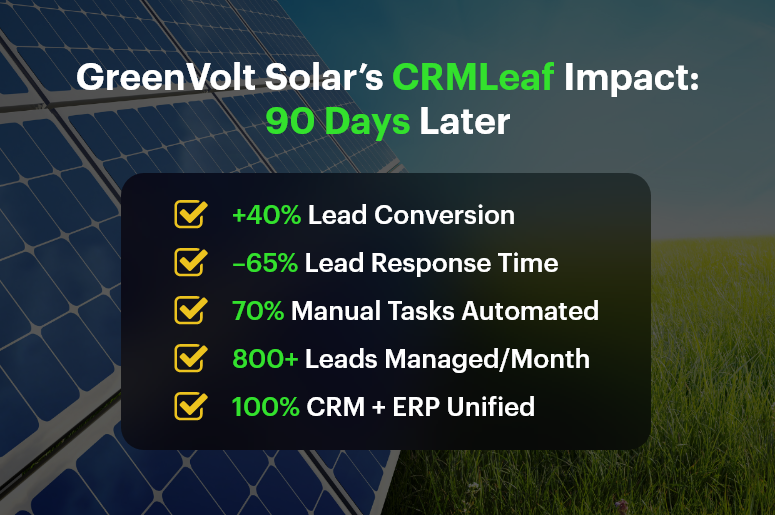
Every sale begins with a simple inquiry — a form fill, a demo request, or a phone call. But how does that inquiry turn into a signed contract?
That journey is the sales funnel — a visual map of how leads move from initial interest to final purchase. Mapping this funnel helps businesses understand where leads drop off, which touchpoints drive engagement, and how to optimize every step for higher conversions.
Without a mapped funnel, you’re flying blind. With one, you can measure, forecast, and scale your sales process systematically.
What Is a Sales Funnel?
A sales funnel represents the stages a potential customer goes through before making a purchase. It visualizes the buyer’s journey from awareness to decision, allowing sales and marketing teams to align strategies and messaging at each step.
Think of it as a roadmap:
- Top of Funnel (ToFu): Generating awareness and inquiries.
- Middle of Funnel (MoFu): Nurturing leads and building trust.
- Bottom of Funnel (BoFu): Closing deals and driving retention.
By understanding each phase, businesses can craft targeted communication, automate follow-ups, and ensure no lead is lost along the way.
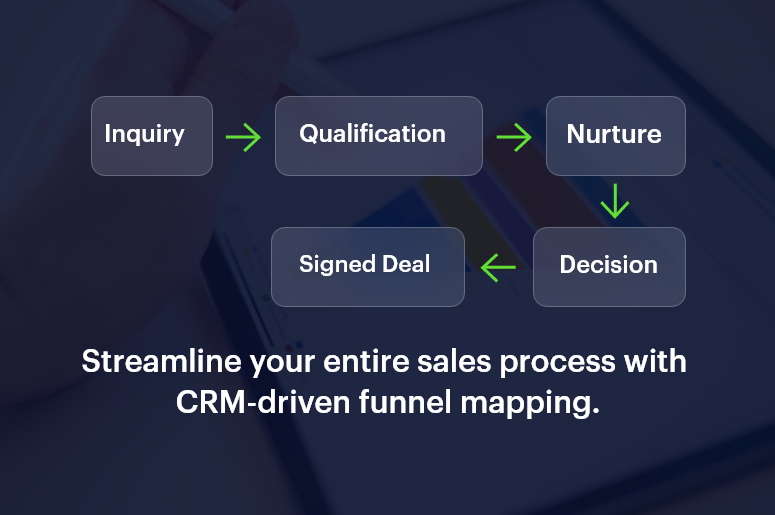
The 5 Stages of a Sales Funnel
1. Awareness: Capturing the Inquiry
At this stage, potential customers discover your business through marketing channels like ads, SEO, social media, or referrals.
- Goal: Generate awareness and attract interest.
- Tools: Landing pages, lead magnets, webinars, and forms integrated with your CRM.
- Tip: Use automation to capture every inquiry instantly — no manual entry, no missed leads.
2. Interest: Qualifying the Lead
Once leads enter your CRM, the next step is qualification — determining if they fit your ideal customer profile.
Key Actions:
- Assign lead scores based on behavior and demographics.
- Segment leads by source, region, or interest.
- Trigger personalized emails or follow-ups.
A strong CRM sales funnel like CrmLeaf automates this process, ranking leads so your sales reps focus on the most promising prospects first.
3. Consideration: Nurturing the Relationship
Now it’s about education and trust-building. Prospects are comparing options, evaluating pricing, and researching competitors.
Strategies:
- Send product demos or free trials.
- Share case studies and testimonials.
- Schedule personalized consultations.
Automation tools help deliver timely, relevant content that keeps your brand top of mind throughout the decision process.
4. Decision: The Closing Stage
This is where deals are won or lost. Sales reps should have full visibility into lead behavior, objections, and communication history.
Key Tactics:
- Offer limited-time discounts or proposals.
- Use CRM reminders for follow-ups.
- Track proposal opens and contract views in real time.
With a mapped funnel, your team can identify what accelerates closure — such as faster response times or personalized demos — and replicate it consistently.
5. Action: Signed & Onboarded
Once the deal is signed, the funnel doesn’t end — it evolves into retention and referral stages.
Post-Sale Focus:
- Automate onboarding sequences.
- Gather feedback and reviews.
- Offer loyalty rewards or upsell opportunities.
Mapping these final stages ensures repeat business and long-term customer relationships.
How CRM Automation Transforms Funnel Management
Manually tracking leads across funnel stages is error-prone and inefficient. That’s where CRM automation comes in.
Here’s how modern CRM systems streamline your funnel:
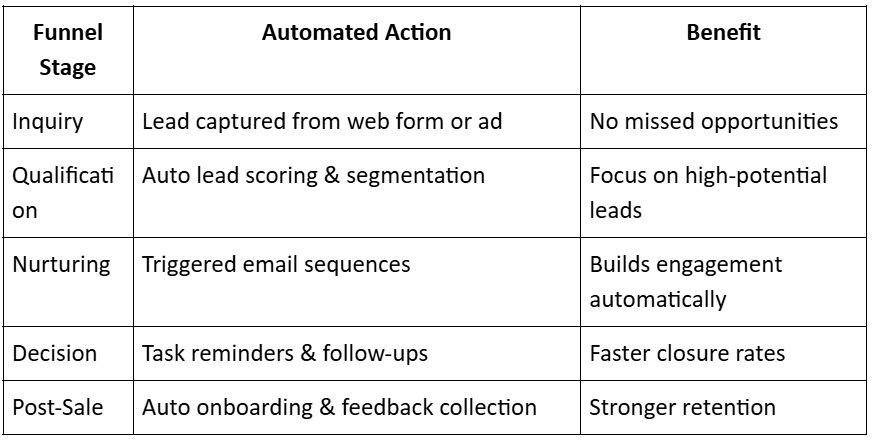
CrmLeaf, for instance, allows complete visibility into your funnel performance — from inquiry to invoice — in real time.
Key Metrics to Track in Your Sales Funnel
To make your funnel data-driven, monitor these essential KPIs:
- Lead Conversion Rate: Percentage of inquiries that become customers.
- Average Deal Velocity: Time taken for a lead to move from first contact to close.
- Stage Drop-Off Rate: Points where leads disengage or exit.
- Customer Acquisition Cost (CAC): Total spend per converted lead.
- Lifetime Value (LTV): Total revenue per customer relationship.
These insights help refine strategies and predict future sales performance.
From Inquiry to Signed with CrmLeaf
Let’s say a construction firm uses CrmLeaf to manage its sales process.
- A lead fills out a form for a “Project Cost Estimation Tool.”
- CrmLeaf instantly captures the inquiry, tags it as “Commercial Construction,” and assigns it to a regional sales rep.
- The CRM triggers an automated thank-you email and schedules a follow-up call.
- When the lead downloads a project case study, their score increases by 20 points.
- The rep receives a real-time alert, conducts a demo, and closes the deal.
Result:
Response time drops from 1 day to 10 minutes. Conversion rate improves by 45% in a month.
Best Practices for Effective Sales Funnel Mapping
- Visualize Every Stage: Use a CRM pipeline view to see lead progression clearly.
- Define Exit Criteria: Know what qualifies a lead to move to the next stage.
- Automate Repetitive Tasks: Free your sales team to focus on closing, not updating spreadsheets.
- Align Marketing & Sales: Share funnel data to ensure consistent messaging.
- Review Weekly: Analyze bottlenecks and refine the process continuously.
The Future: AI-Driven Sales Funnel Optimization
AI-powered CRMs are transforming funnel management by:
- Predicting which leads will convert next.
- Suggesting optimal follow-up times.
- Automating pipeline prioritization.
- Recommending personalized engagement tactics.
With predictive insights, sales teams no longer chase — they anticipate.
Conclusion: Map It, Measure It, Master It
Your sales funnel is more than a diagram — it’s the heartbeat of your business. When mapped correctly and supported by CRM automation, it delivers clarity, efficiency, and predictable growth.
From the first inquiry to the signed contract, every touchpoint matters.
The businesses that map, measure, and master their funnels are the ones that scale sustainably.
FAQs on Sales Funnel Mapping
1. What is sales funnel mapping?
It’s the process of visualizing and tracking each stage of your sales process, from lead generation to deal closure.
2. Why is sales funnel mapping important?
It helps identify bottlenecks, improve conversions, and align marketing and sales teams.
3. What tools are used for mapping?
CRMs like CrmLeaf provide visual funnel dashboards and automation workflows.
4. How often should I review my sales funnel?
Weekly or monthly — depending on deal volume and sales cycle length.
5. Can automation improve funnel conversion?
Yes. Automation ensures instant responses, reduces human error, and keeps leads engaged throughout their journey.